
Concealed faucet installation and bathroom aesthetics. How to achieve a stylish and modern look?
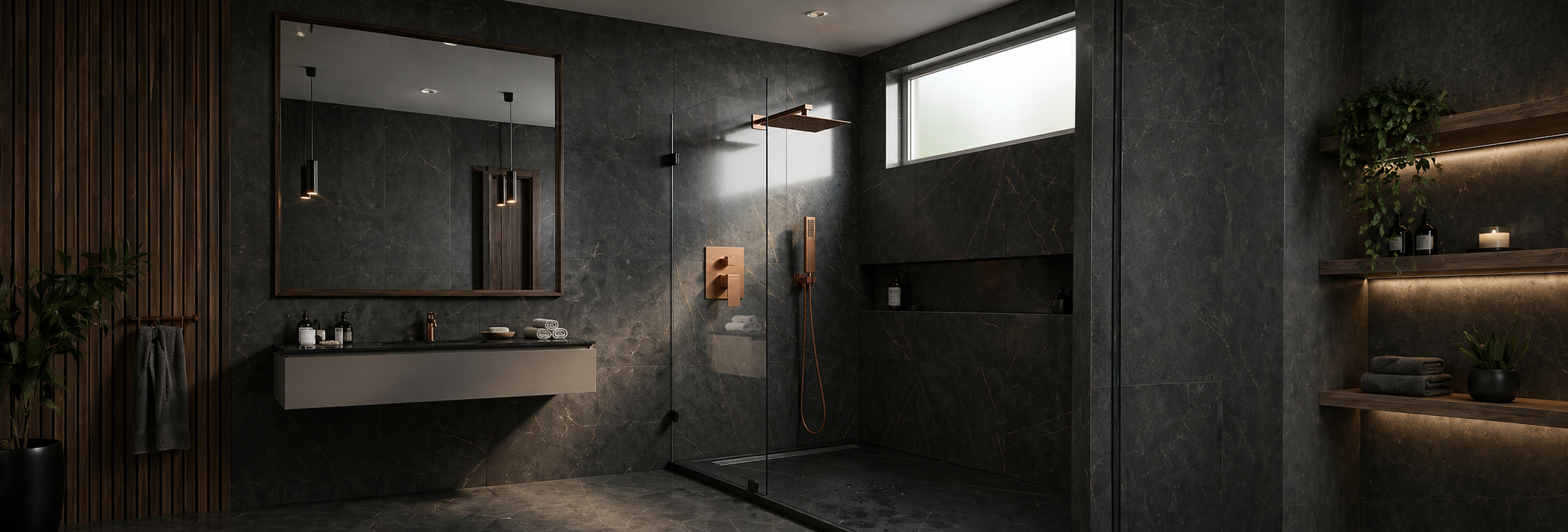
It is no coincidence that during bathroom renovations or finishing, most homeowners and apartment owners decide to install a concealed faucet. This applies to washbasin faucets, among others, but the trend also includes concealed showers. The installation of such fittings perfectly combines functionality with aesthetics. At Balneo, we prefer such solutions, knowing the expectations of our clients. Check out how to achieve a stylish and harmonious bathroom look through the proper installation of a concealed shower set and faucet.
Why does the installation of a concealed faucet or a concealed rain shower positively affect bathroom aesthetics?
Contemporary design trends mean that when asked: concealed or surface-mounted shower, most bathroom owners give the first answer. For at least two decades, minimalism, the so-called "clean look," has reigned in space arrangement, which does not necessarily mean asceticism. Modern design takes into account simple shapes without unnecessary decorations and a touch of futurism.
Concealed faucet installation perfectly fits into this trend. This type of faucet is characterized by a mechanism completely hidden in the wall or ceiling, while only the panel or rain shower remains visible on the outside to household members and guests.
It is worth noting that in smaller rooms, the installation of a concealed shower or washbasin faucet saves some space and visually enlarges the bathroom. Easier cleaning is also not without significance.
An alternative to classic black is the gun metal shade – check out how to use gun metal in bathroom arrangements.
Concealed rain shower or faucet installation – what to choose for design?
The installation of a concealed shower or washbasin faucet means that the installation mechanism should be reliable, because if necessary, it makes maintenance a bit difficult, but let's focus on aesthetics first. After all, it is the design of the fittings that makes household members and guests feel comfortable and pleasant in the bathroom.
Concealed washbasin faucet installation
When it comes to washbasin faucets, minimalism currently reigns supreme. Rounded solids without sharp edges, and above all, without unnecessary decorations, dominate. The spout simply protrudes from the wall, delivering a stream of water to the washbasin, but without catching the eye too much when not in use. However, playing with colors plays an important role, and modern bathrooms are dominated by stylish, timeless colors such as silver, shades of gray, gold, and copper. Deciding on the installation of a concealed washbasin faucet, you can find exactly such proposals in the Balneo store offer.
Concealed shower installation
Similar concepts dominate when bathroom owners choose concealed shower faucets. In a shower enclosure, the traditional body is unnecessary because it can be replaced by a very discreet, flat control plate that additionally maintains color consistency with the bathroom tiles. In the bathroom, especially in the shower enclosure, any protruding elements mean less user comfort. Shower faucets in the Balneo store offer are very discreet designs, also maintained in timeless colors.
Concealed rain shower installation
The installation of a concealed rain shower is no exception to this minimalist trend. It is worth using an ultra-thin design that, protruding discreetly from the ceiling, will provide the user with the experience of rain pleasantly washing over the body, living up to its name. Currently, All in One sets containing a rain shower, hand shower, and side jets are the most popular, which also helps to maintain visual consistency in the bathroom.
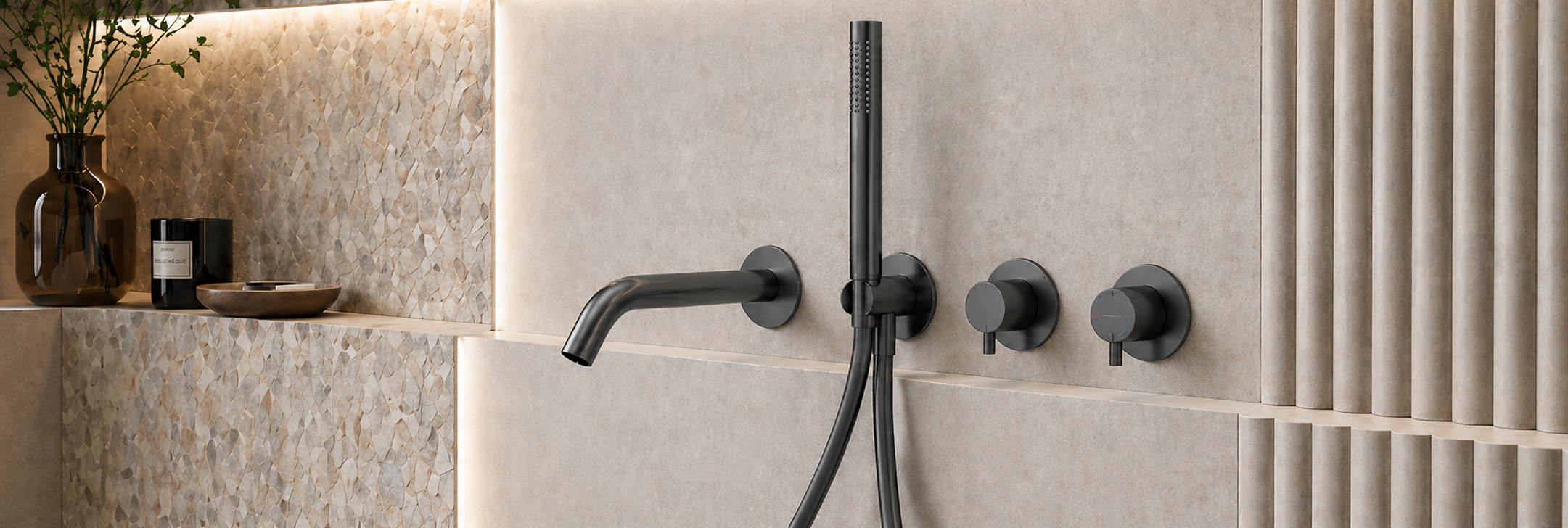
Concealed faucet – installation and plumbing plan
A concealed shower installation, just like a washbasin one, requires a careful project design. It determines the final success. If you have no experience in this matter, it is worth relying on the help of a professional designer. When it comes to concealed faucets, installation requires taking into account a sufficiently wide hole in the walls and enormous precision. Otherwise, compromises such as asymmetrical tile placement will be necessary later.
Concealed washbasin faucets – installation
The installation of the concealed faucet itself requires attention primarily to three technical aspects:
- The faucet spout must be perfectly centered and leveled to symmetrically align with the countertop.
- The installation requires discreet sealing, for example, using silicone that matches the grout color.
- All mounting elements and screws should be hidden so as not to disturb the visual harmony of the surroundings.
Concealed shower faucet - installation
A concealed shower installation also requires precision. The control panel is usually placed at a height of about 110 cm from the floor because it is a kind of resultant of aesthetics and ergonomics. The placement of the panel should align with the wall tiles to maintain symmetry. In turn, the installation of a concealed rain shower requires full water resistance and good sound insulation, as well as taking into account a slight inclination angle of about a 2% slope towards the wall.
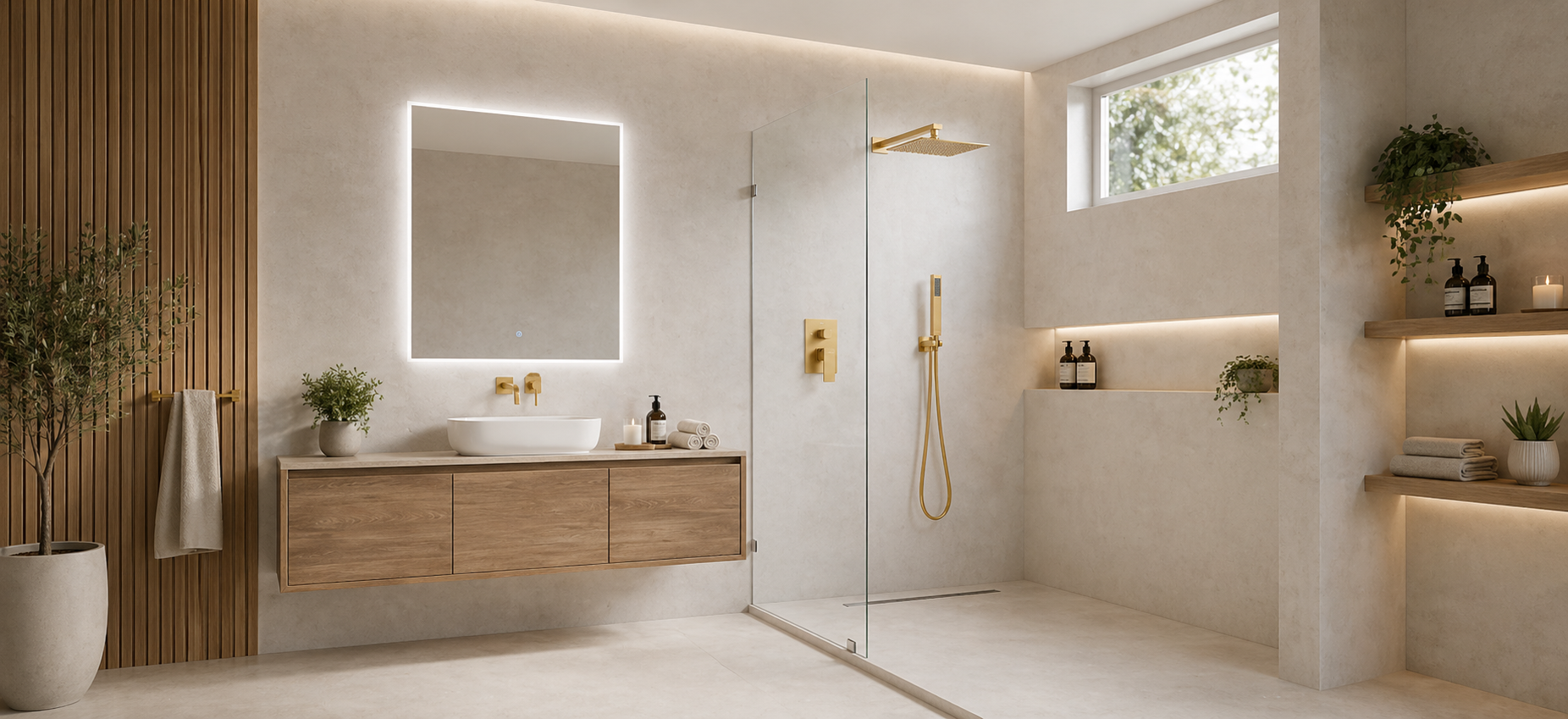
Check what mistakes to avoid when installing a concealed faucet
When installing a concealed faucet, it is relatively easy to make a costly mistake. Here are some examples you need to keep in mind:
- Imprecise leveling of the body – its position should be verified in three planes – vertically, horizontally, and in depth. It is best to use a laser level for this, both before installation and after attaching the pipes and applying the plaster. Otherwise, the mechanism will wear out faster, and the water stream will flow asymmetrically.
- Inappropriate color selection – the color scheme of the faucet should match the tiles and walls, as well as other bathroom decor elements such as countertops.
- Lack of symmetry – the faucet must absolutely visually align with the tiles and grout lines based on symmetry.
- Inaccurate sealing – visible silicone may change its color over time and disrupt the effect of a smooth surface.
- Lack of insulation – the mistake mainly concerns waterproofing, but also sound insulation. If water gets behind the tiles as a result of incorrect installation of the concealed faucet, mold will soon appear. During installation, use a complete insulation set with liquid foil, sealing mats, and collars around the box and screws. Sound insulation depends on the choice of faucet, but not only. It is worth using rubber vibration dampers and flexible connections, as well as mineral wool as insulation in partition walls. It is worth avoiding rigid pipe fastenings to the wall, which favor the creation of noise.
- Lack of harmony with bathroom lighting – chrome faucets look poor in warm light, while matte ones lose their elegance in cold color temperatures.
Before you completely wall up after installing the concealed faucet, perform a leak test. Start with an air test, which is safer and helps detect major errors. Connect a compressor to the water installation and set the pressure to about 0.15 bar or higher if the faucet manufacturer allows it. Close the pump valve and observe the faucet for about half an hour. If the pressure gauge indicates a pressure drop, it means a leak. Additionally, it is worth applying a soap and water solution to all connections so that any leaks will reveal themselves in the form of air bubbles. If everything is fine, proceed to the next stage, which is the water test.
Fill the installation with cold water and ensure it is properly vented. Use a pressure pump, setting the pressure value slightly above one bar or more, if the manufacturer allows it. Maintain the pressure for at least an hour and observe the pressure gauge. Allowable drops should not exceed 0.5 bar. Visually assess all connections for leaks. The test should be carried out at a constant ambient temperature.
If everything is fine, slowly drain the water and remove the test plugs. Flush the installation through all outlets. Now you can finish the installation of the concealed faucet by applying plaster and laying tiles.
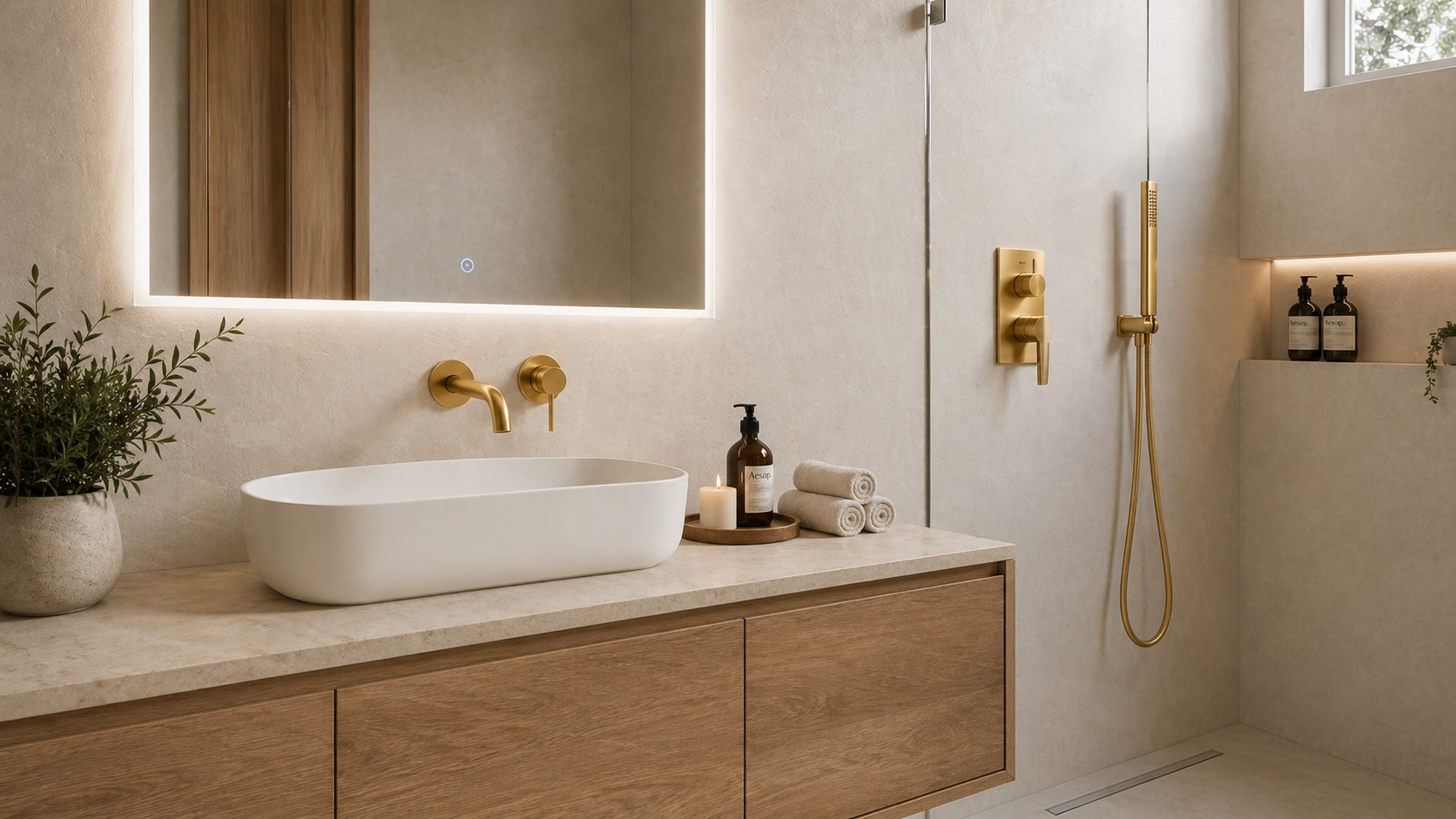
FAQ
1. What is the minimum wall thickness sufficient to install a concealed faucet?
Usually, a minimum wall thickness of 8–10 cm is necessary to make the installation of a concealed faucet possible.
2. How to prepare the ceiling for the installation of a concealed rain shower?
Installing a concealed rain shower requires preparing the section of the ceiling where the installation will be located. Waterproofing and good sound insulation are crucial, thanks to which the water flow above the ceiling is not heard. You also need to take into account a slight slope towards the wall reaching a maximum of 2%.
3. Does the installation of a concealed faucet make it difficult to service the installation in the event of its damage or failure?
No, provided that an inspection hatch is used to facilitate access to the mechanism.