
What to clean black fittings with — proven methods that do not damage the matte finish
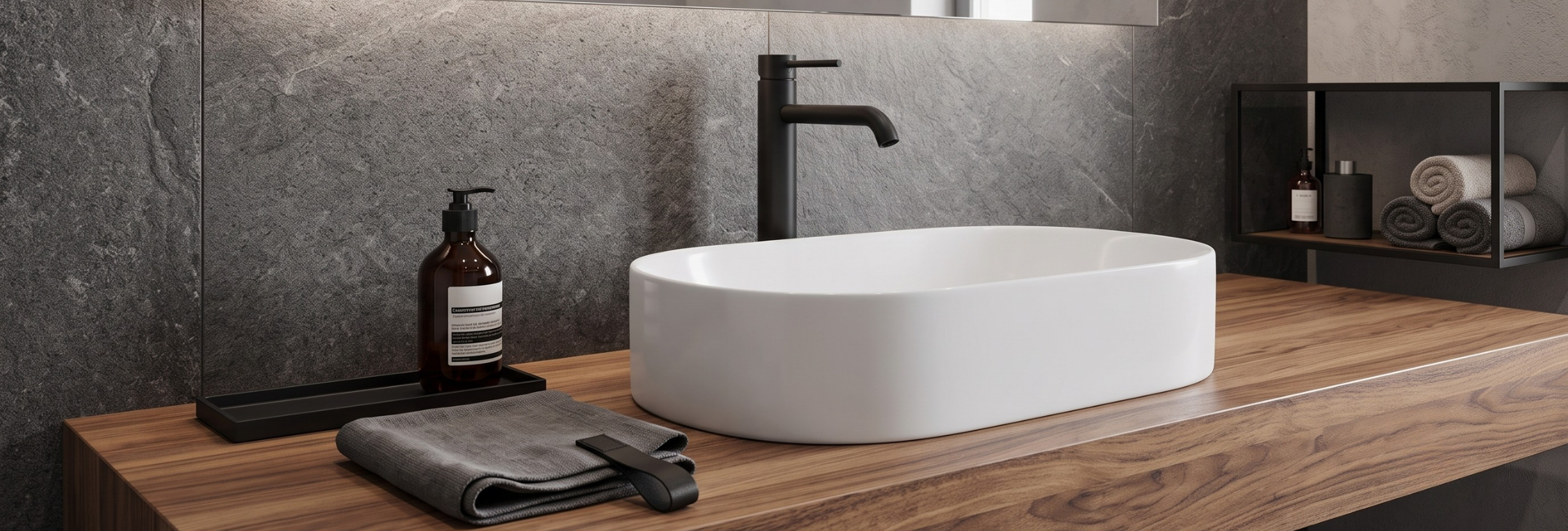
Black fittings are very popular in modern bathrooms, which is confirmed by the purchasing choices of Balneo store customers. There is no shortage of proposals in this universal, timeless color. The matte finish is particularly popular – minimalist and in line with contemporary trends. At the same time, cleaning black fittings is quite a difficult challenge, on which limescale, water stains, and even fingerprints are immediately visible. Fortunately, bathroom faucets, showerheads, or rain showers do not have to look unsightly due to dirt. Check what to clean black bathroom fittings with. Find out what tools to use for this. Choose the perfect cleaner for black fittings – home or professional!
What to clean black fittings with? The most important rule and a useful habit!
Before we present agents for cleaning black fittings, let's focus on the most important component of success, which is choosing the right tool. An ordinary soft microfiber cloth remains unrivaled in cleaning black faucets, handles, and showerheads, including those with a matte finish. If you do not have it at hand, you can also use a chamois or any cotton fabric, for example, an old t-shirt. Avoid rough sponges, toilet paper, hard-bristle brushes, and especially wire pads. The risk of scratching the surface is too high.
IMPORTANT: Cleaning black bathroom fittings is most effective when it is done regularly – after each use of the faucet or showerhead. If you wipe it dry with a microfiber cloth, there will be no water stains left on the matte surface, and limescale will not accumulate.

Home cleaner for black fittings – choose one of the options
When it comes to effective home remedies for cleaning black fittings, the choice is really wide. Each of our proposals should perfectly prove itself in your bathroom!
Everyday liquid for cleaning black fittings
Contrary to appearances, an effective liquid for cleaning black fittings does not have to be a product created specifically for this purpose. Dishwashing liquid works perfectly as a gentle and effective detergent - preferably one with a natural pH. Dilute a few drops of the liquid in warm water, moisten a microfiber cloth in it, and wipe the surface of the black fittings. Then rinse the cleaned surfaces with water and dry thoroughly with a dry cloth. In this clean way, you will get rid of soap scum and fingerprints.
Home solution - an ideal agent for cleaning black fittings and removing limescale
A slightly more difficult challenge is cleaning black bathroom fittings in such a way as to remove troublesome unsightly limescale deposits from their surface. Among home remedies for this purpose, you can use one of the following solutions:
- Vinegar solution - dilute spirit vinegar with water in a 1:1 ratio and soak a microfiber cloth or - optionally - a paper towel with this solution. Then wrap the sensitive surface with the cloth or towel and wait a maximum of 10 minutes. Afterwards, gently wipe the surface with the cloth, rinse the surface with water, and dry it.
- Citric acid - prepare an appropriate solution by dissolving two teaspoons of citric acid in a glass of warm water. Usually, it has a slightly milder effect than a vinegar solution, which may mean a better choice for very delicate surfaces. Use the solution in the same way as vinegar, and the preparation should meet your expectations.
- Baking soda - limescale and greasy dirt can be effectively removed from black fittings using baking soda, to which you must add a little water to change its consistency. Later, apply this mixture point-wise to the soiled surfaces and wait a few minutes. When cleaning the surface with a cloth, make very gentle movements, because otherwise there is a risk of scratching the fittings.
IMPORTANT: Although the manufacturer does not always recommend what to wash black fittings with, they relatively often present what preparations to avoid. Before you start working, make sure that vinegar, baking soda, or citric acid are really safe for the matte surface.
Professional agents for cleaning black fittings - preparation or steam cleaner
Usually, cleaning black fittings is effective with home methods, but professional methods are still in reserve. One of them is the use of a steam cleaner. Hot steam perfectly softens the deposit and is usually safe for matte surfaces. Later, just wipe the fittings moistened with a cloth and dry them. Cleaning black fittings with a steam cleaner has an important advantage, consisting in disinfecting the surface without the use of chemicals.
On the market, you will also find a full range of professional detergents intended for cleaning black fittings. Most of them cope very well with limescale and soap deposits, let alone superficial dirt. It is important that the preparation for black matte surfaces has a neutral pH and is intended for the coating covering the equipment elements of your bathroom.

FAQ
1. How to remove limescale from a black faucet?
Limescale on a black faucet looks very unsightly, however, it can be relatively easily removed with home remedies, as long as the manufacturer does not exclude them. Proven methods include citric acid, spirit vinegar, and baking soda. If you have a steam cleaner, it also perfectly removes limescale from black matte surfaces. Dedicated detergents are also in reserve.
2. What to clean a black toilet seat with?
Warm water with a few drops of dishwashing liquid or a solution of vinegar and water in a 1 to 1 ratio works perfectly for everyday cleaning of a black toilet seat. The toilet bowl is another place where limescale easily accumulates. Baking soda or citric acid, or even a combination of vinegar and soda, can be helpful in removing it. Special preparations intended for black fittings are also available on the market. The most important thing is that they do not contain chlorine and abrasive particles.
3. How often should black fittings be cleaned?
It is best to clean black fittings after every use, thanks to which deposits and water stains will not appear on them. Otherwise, more advanced cleaning will be necessary from time to time to eliminate accumulating limescale.
4. What not to clean black fittings with?
Black fittings should not be scrubbed with a hard-bristle brush, a wire pad, or a rough sponge. When it comes to preparations, you should avoid agents containing chlorine, as well as powders and pastes with abrasive particles. Before you choose agents for cleaning black fittings, check what the manufacturer prohibits, so as not to damage its surface and lose the warranty.